
An unfortunate question I am sometimes asked is similar to this: “I lost my prized shade tree! What can I plant that will grow fast and give me shade?” While there is no instant fix to this scenario, let’s review a few trees that might be better choices here in northern Indiana. One obstacle to…Read more about Fast-Growing Trees for the Landscape[Read More]
John Woodmansee

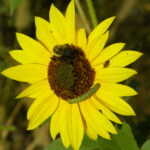
As you travel in rural Indiana this time of year, you may happen upon a field of sunflowers. It’s so beautiful that drivers will occasionally pull off on the side of the road and take pictures. Perhaps you grow sunflowers in a more limited capacity in your home garden. Today, we’ll review a few items…Read more about Amazing Sunflowers[Read More]
Do your landscape plants have cankers, mosaics, galls, mummies, or witches’ brooms? These and other symptoms are often difficult for the average homeowner to understand, let alone visualize. Purdue Extension staff can often assist with diagnosing plant diseases. Additionally, Purdue Extension specialists Janna Beckerman (retired) and Tom Creswell authored the publication, “Symptoms and Signs for…Read more about Plant Disease Symptoms You Could Notice in Your Home Landscape[Read More]
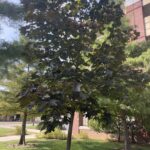
These three maples have somewhat similar-looking leaves. On the surface, you may think this is simply an academic exercise. But if you care about invasive plants and local ecology, this distinction is an important one. Norway maple is an invasive tree species, while sugar and black maples are native tree species (sometimes called hard maples)….Read more about Distinguishing Between Norway, Sugar, and Black Maples[Read More]

Poison hemlock was introduced to North America as a garden/ornamental plant. It is a native of Europe, and it is a member of the Apiaceae (parsley) family. Purdue experts Bill Johnson and Marcelo Zimmer wrote about poison hemlock in a Purdue Pest & Crop newsletter. They wrote that poison hemlock can be noticed very early…Read more about Recognizing and Managing Poison Hemlock[Read More]

Garlic mustard (Alliara petiolata) can be found in public parks, backyards, meadows, forests, gardens, and along roadsides throughout Indiana. The leaves have a strong garlic smell to them. Garlic mustard was first introduced from Northeastern Europe in the 1860s in Long Island, New York. Immigrants from Europe used it for food (an herb), medicine, and…Read more about Managing Garlic Mustard[Read More]